Recovery
Know when to push, and when to rest.
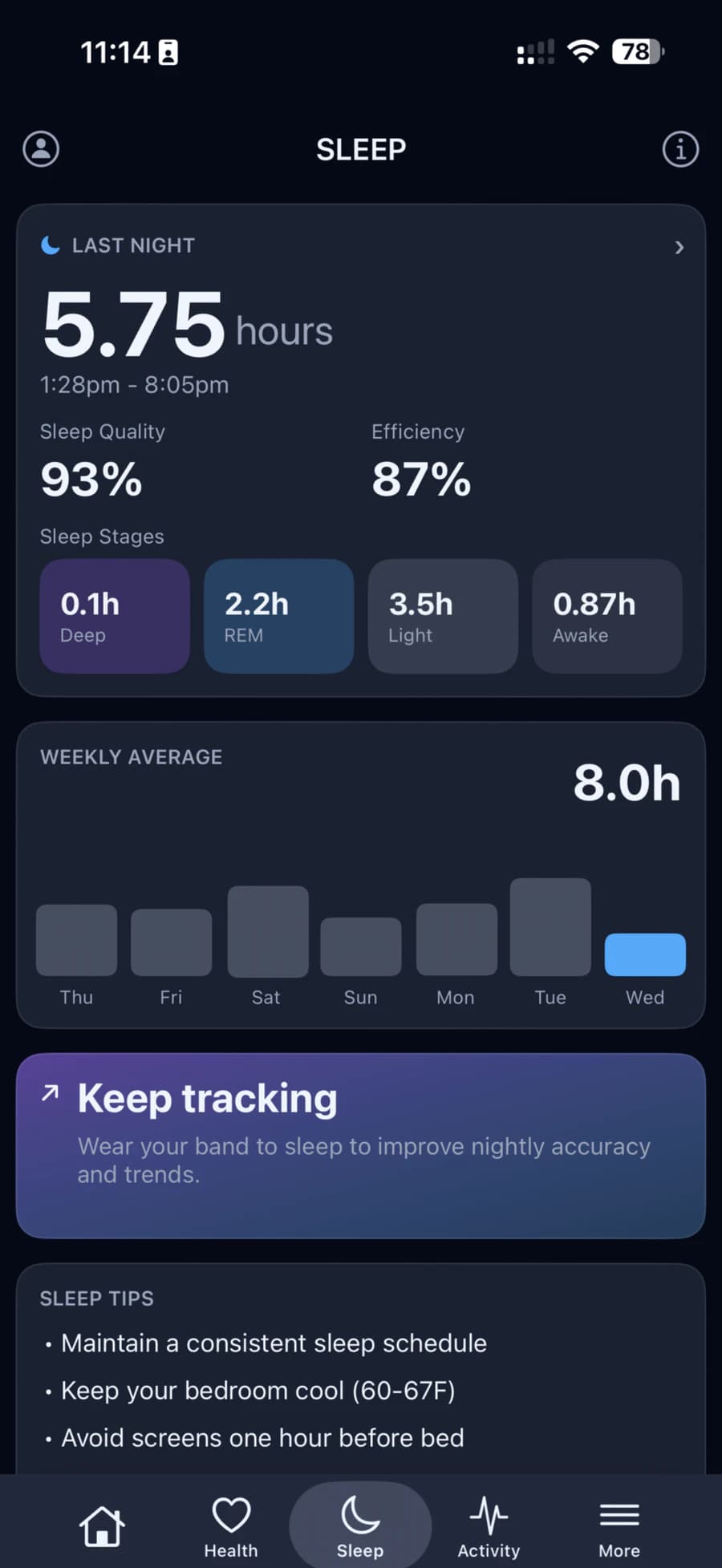
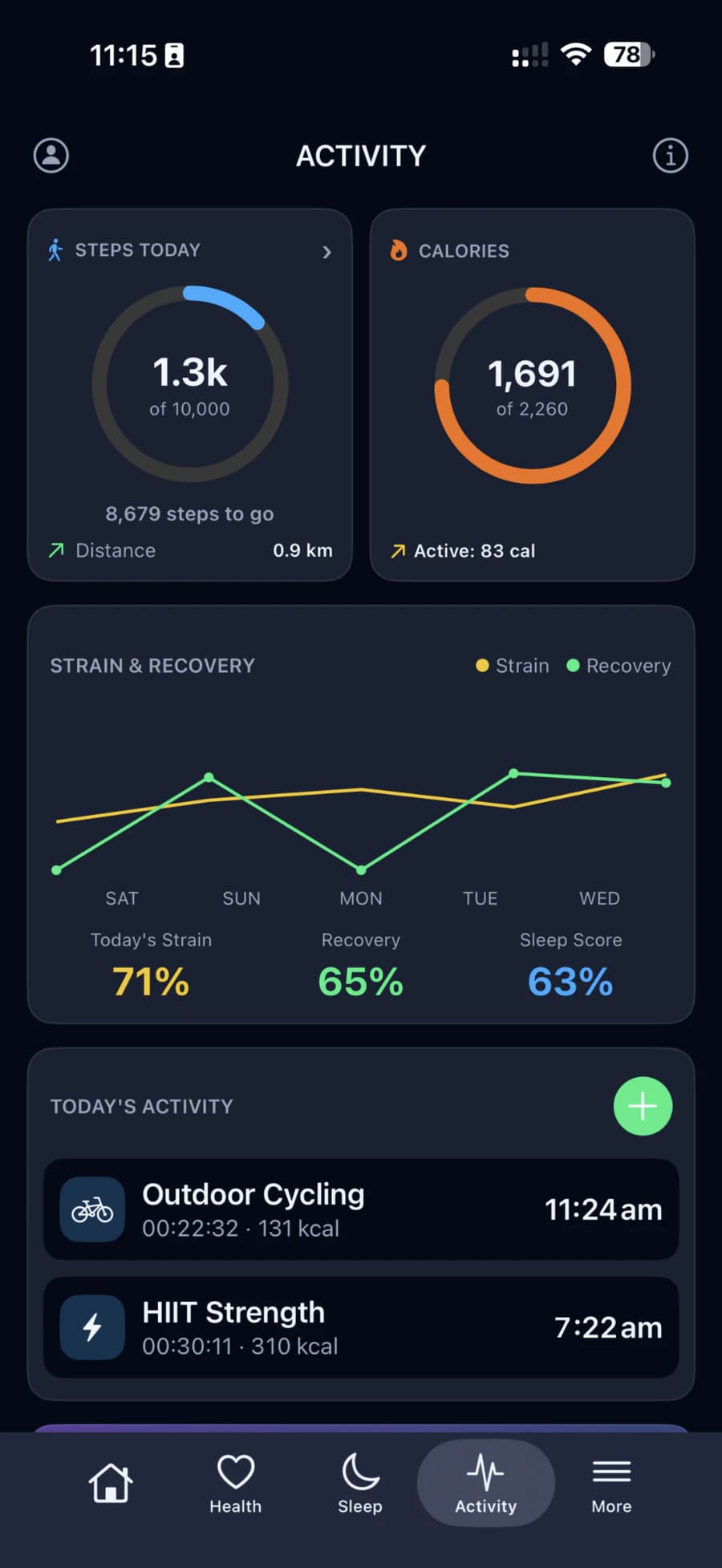
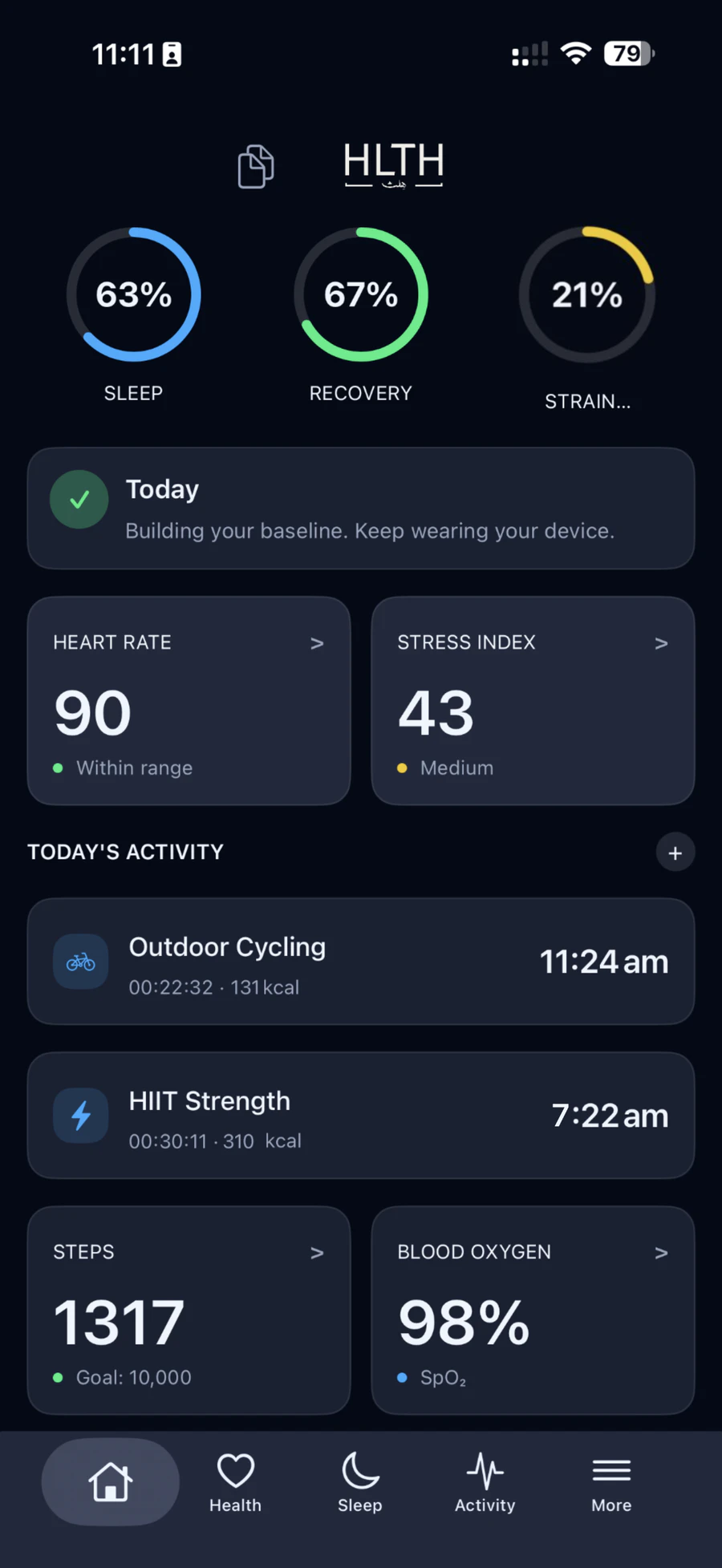
Every morning HLTH gives you a recovery score from 0 to 100%. It compares last night with your own normal: a high score means your body is ready for more, a low one says take it easy.
What it looks at
Measured against you, not an average.
Recovery doesn't compare you with other people. It compares last night with your own typical nights, using three things the band measures while you sleep.
What shapes your score
HRV during sleep
Counts the most.
Resting heart rate during sleep
Lower than usual is better.
Your sleep
How long and how well you slept.
Calibration
Two weeks to learn you.
Before your first score, HLTH needs 14 nights within three weeks to learn your baseline. A night counts when the band recorded your sleep and your heart rate or HRV during it. Until then, the app shows how many nights are done.
Daily insight
Read it with your strain.
On the home screen, recovery sits beside the day's strain. One short line puts them together: when you're ready to push harder, when you're training at the right level, and when it's time to rest.
How it’s worked out
Last night, against your normal.
Your baseline
From your qualifying nights, the app learns your typical HRV, resting heart rate and sleep.
Last night
It measures the same things for last night's sleep.
Your score
Each is compared with your baseline, HRV counting the most. A night like your usual one scores about 70; better nights score higher, up to 100.
For general wellness. HLTH is not a medical device.