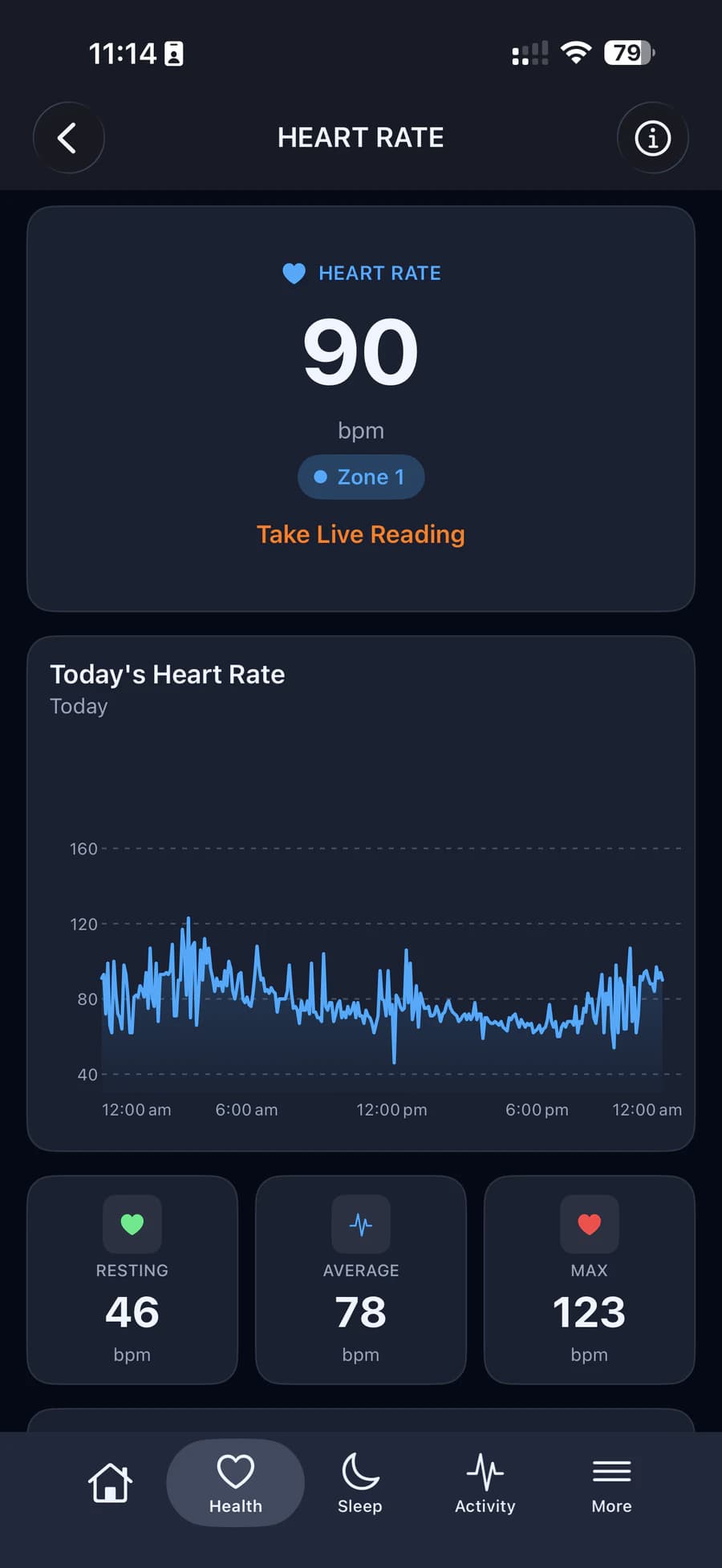
Wellness
The quiet signals, too.
Beyond heart rate, your band follows three quieter signals: heart rate variability, blood oxygen and the stress index. Each has today's chart and a view of your week.
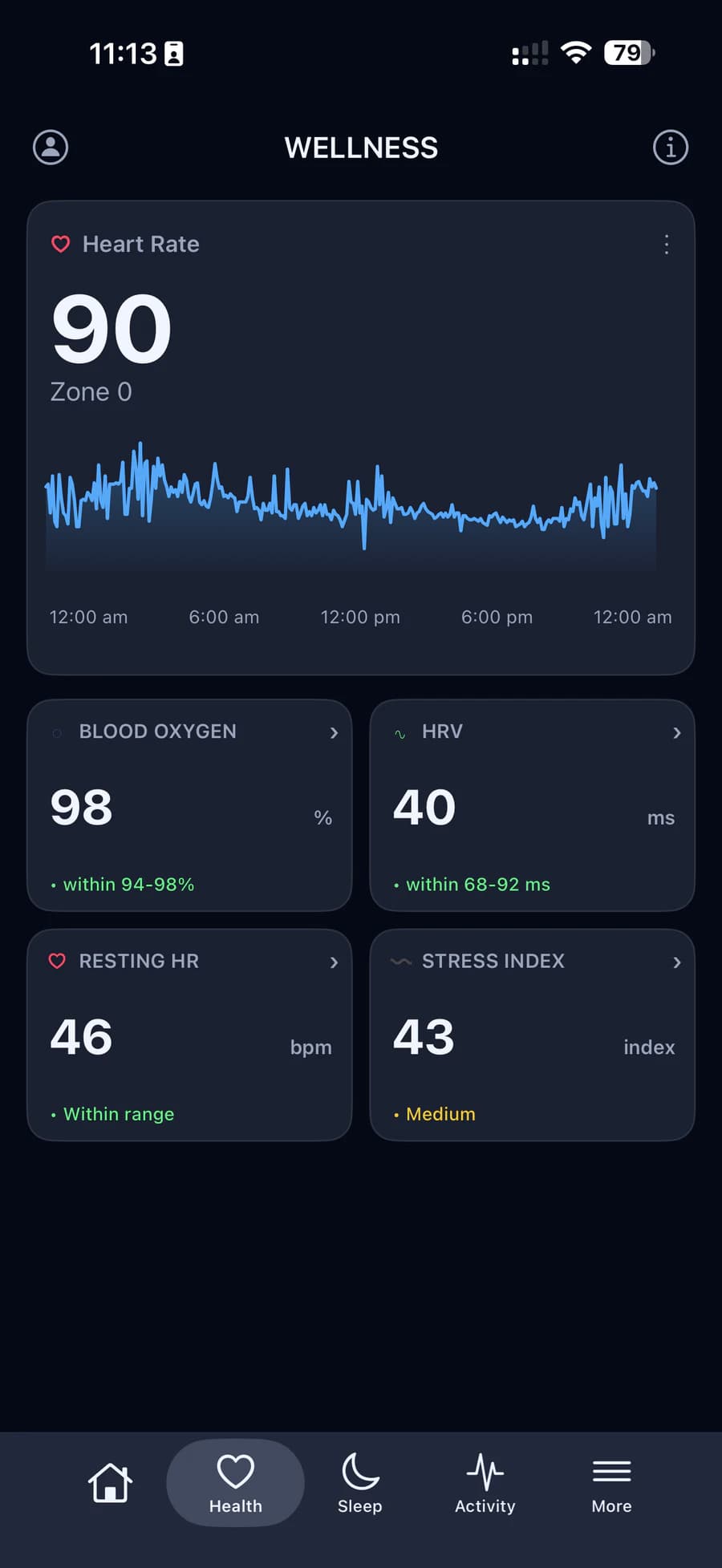
HRV
The tiny gaps between beats.
Heart rate variability is the small change in time from one heartbeat to the next. Higher HRV usually goes with better recovery; stress and tiredness can lower it. Each reading gets a simple word: Low, Typical or High. Your HRV during sleep also feeds your recovery score, where it is compared with your own baseline.
Blood oxygen
Blood oxygen, through the day.
Your band checks your blood oxygen through the day, and you can take a live reading whenever you like. See today's chart, your lowest, average and highest, and how each day of your week went.
Stress index
Stress, day by day.
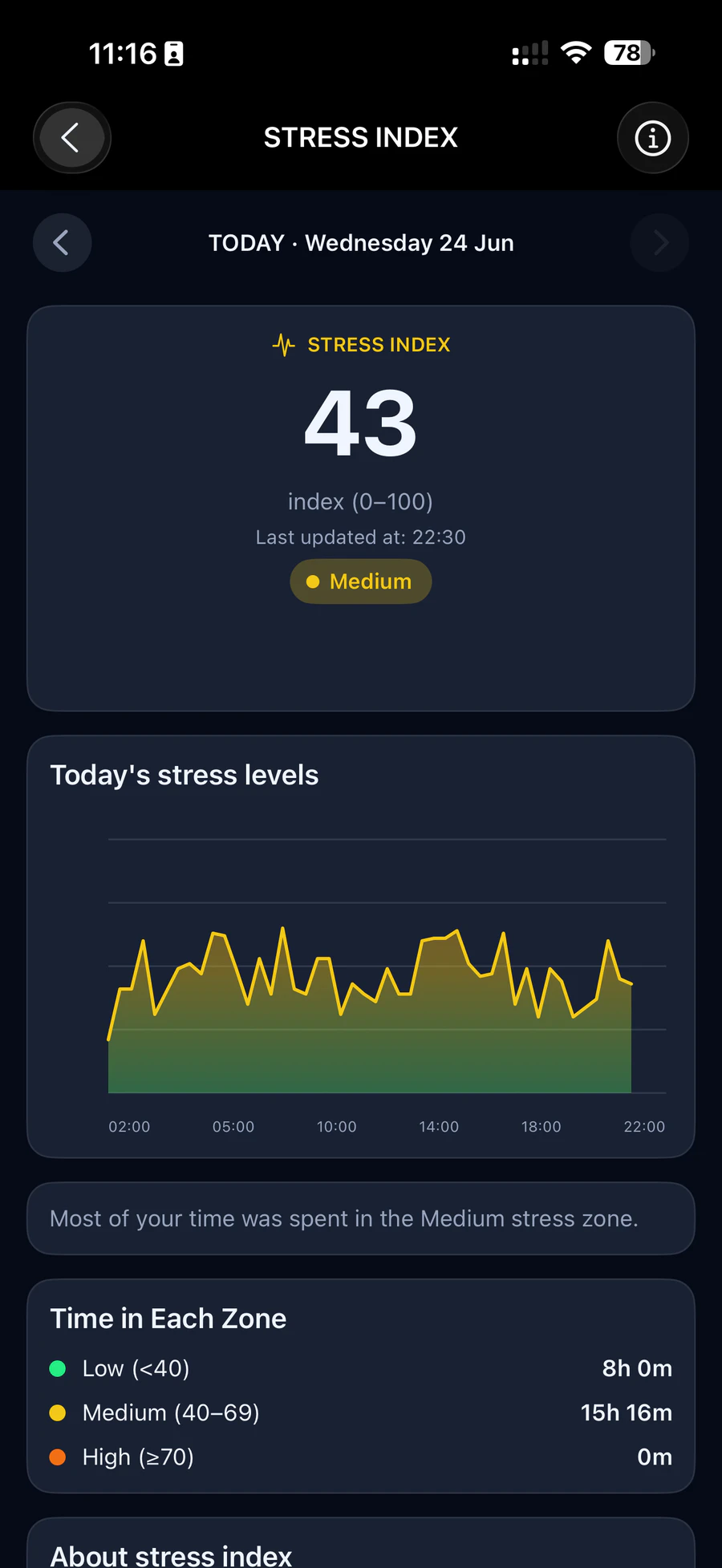
The stress index is a reading from your band, from 0 to 100, based on your heart-rate signals. See today's levels, how long you spent in low, medium and high stress, and when your longest stretch of high stress happened.
Stress and strain
Two different things.
Stress and strain sound alike, but they measure different things, and HLTH keeps them apart.
- Stress
- A momentary reading from your band, based on your heart-rate signals. You'll find it here, in Wellness.
- Strain
- The load your heart carried over the day, built up by the app from your heart rate. You'll find it on Home and in Activity.
Where the numbers come from
From your band, kept on your phone.
HRV
From your band's automatic readings. A live reading shows on screen but isn't saved.
Blood oxygen
From your band's automatic readings, plus any live readings you take.
Stress index
Worked out by your band from your heart-rate signals; the app shows your time in each level.
For general wellness. HLTH is not a medical device.